Check Out These Top Deck Design Tips Before You Do Anything Else
STOP! Read This Before Starting Your Deck Project!These deck design tips may save your project, so take the time to read carefully. Print this page, take notes, use your highlighter, do whatever you need to do, but keep these deck design tips handy as you go through the planning process. As you proceed, come back to these and make sure you're still on track and that you haven't forgotten anything. Some of these tips may not apply to your particular situation, and you probably won't want to use every one. Or maybe you don't have the budget for some of these. But I don't want you to get your deck built and then say, "Awww, man! I wish I had thought about that earlier!" Instead, I want you to stand back, smile, and say "It's perfect! It's just what I wanted!" In fact, I want it to be better than you imagined. That's the reason for this list of deck design tips. Actually, that's the reason for this entire site.
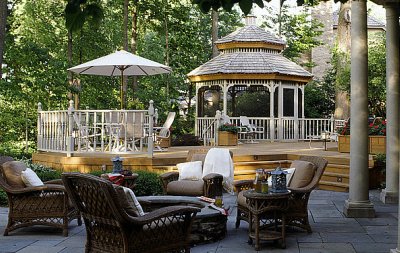
Think of your deck design process like you were planning a room, or a couple of rooms. Think of what furniture you plan to use. Who will use the space and for what? How many people are likely to be there at once? Allow space for standing around and walking. Your first decisions are basic, but not always easy. And these are places where the first mistakes get made. If this part is wrong - its hard to make the end result come out right. So take your time and think through this part. And as always, keep the whole backyard design idea in mind as you plan your deck. You'll want it to blend in with the overall concept once everything else is in place. Since this is often a process that takes place over time - usually years - you will need to take a very wide, big picture look before finalizing your deck design. These deck design tips are an effort to get you started - and to stay - on that right track. What size does your deck need to be? I've never heard anybody say, "I sure do wish I had built this deck smaller!" or "I hate all this space on my deck!" Nope, it's never happened in my experience. So build as much as you can afford without letting it overwhelm your overall outdoor living space. Don't cover your entire yard, and don't interfere with other backyard components you may want in the future. But allow as much room as your space, your overall backyard plan, and your budget will allow.
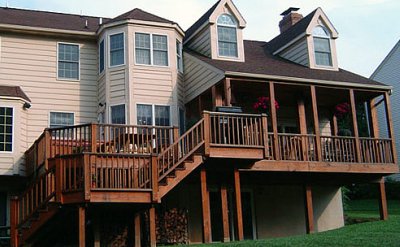
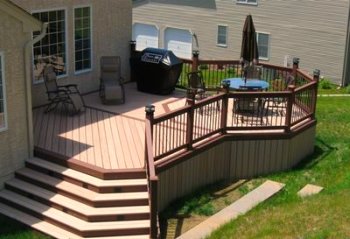
What shape does your deck need to be? Squares and rectangles are the most common deck shapes, and with good reason. They are efficient designs, both in terms of cost and function. But they can be pretty boring. Those efficiency principals remain true if you join those shapes together, like an "L" shape. You're still dealing with basic straight lines, but the shapes get much more interesting if you put them together like blocks. You may also consider building those "blocks" on different elevations. Even a one step drop from one section to another can make a dramatic difference, for very little money. Multi-level decks can create a "sectioned off" feel, so you can almost have seperate rooms while keeping everything open. So you don't have to build a round deck in order to have an interesting shape. Rounded decks are great, but they ain't cheap! An "in-between" idea is to use angles. You'll add some cost, but as long as you don't get too carried away, it isn't that much. What materials will you use to build your deck? There are a number of great materials you can use to build your deck. And there are even more options when you start planning your deck railing. The differences between the materilas are essentially longevity, maintenance, appearance, and cost. Read here to learn much more about material options. Once you have answered these questions - How big? What shape? Which materials? - we can get started with the cool deck design tips below. After going over these tips, come back to these basic questions and see if they need to be modified. You may even have to start over with a different design. But this is the thought process you need to go through to end up with that dream deck. So let's get going with the cool stuff. As you go through these tips, click on the highlighted links for additional information on various topics. Here we go!
DECK DESIGN TIPS - #1 Think Like You're Building an Outdoor RoomI mentioned this earlier, but it warrants repeating. Don't think of your project as a deck, or as something just added to your house. Think of it as an extension of your living space. How do you live? Is
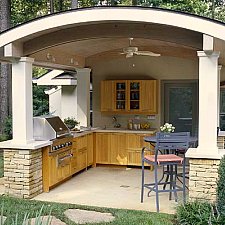
cooking
a significant part of your lifestyle? Or might it become so outside? Do you entertain? Do you gather with a bunch of friends to
watch a game?
Or would you be more likely to have just a couple of friends over to relax and enjoy good conversation? Maybe you will only use the deck for your family. Will you need space for tables and chairs? Weigh these things out and make sure your deck design fits your lifestyle. Consider your climate and whether you're likely to use your outdoor space in cool weather. Should you plan for an
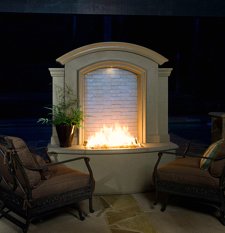
outdoor heater
or a
fire feature?
What about a
water feature?
Your lifestyle and the way you interact with your friends will determine what you need in your outdoor space, including your deck.
DECK DESIGN TIPS - #2 Think About Contrasting MaterialsCould you blend in different materials to make your deck design more interesting? How about brick or stone support columns? If you will be adding a fire or water feature, what will it be made of? Contrasting styles, colors, and materials add interest. Don't get too carried away - it's easy to get too much of a good thing. A popular way to create interest is to use a different
material
for your
deck railing.
A redwood deck with
aluminum railing
can be stunning. How about
glass railing
on a composite deck? Even the use of one material for the railing posts and another for the rails and pickets can create a beautiful and distinctive look. Maybe you can use brick support columns that continue above the deck level to serve as railing posts. Don't forget to consider the materials used on the exterior of your house. Try to continue those materials and colors onto your deck. Remember, your objective is to extend your living space into the outdoors, so you should also extend the house design into that new space.
DECK DESIGN TIPS - #3 Think Low Maintenance You have a number of choices when it comes to building materials for your deck. Some of them are very low maintenance. That's the good news. The not so good news is that the cheapest material is also the highest maintenance. Treated pine is by far the most common material for deck building. More exotic woods like redwood and ipe require much less maintenance and last longer. Composite decking material requires even less
maintenance.
These materials cost more than treated pine, but they benefits are often worth the extra cost. The budget decisions are up to you.
DECK DESIGN TIPS - #4 Consider Covering Part of Your DeckWill you want to use your deck if it's raining? How about when the temperature gets well into the 90's? Depending upon how you plan to use your deck, you may want to consider adding a
covering
over it. If you just want to block some of the sun, consider a pergola. It's no help with the rain, but it can provide limited shade and can keep the temperature down a few degrees. A full covering will allow you to remain outside in bad weather. It's usually best not to cover your entire deck, because there are times when you'll want the sun. If you don't want to have a structural cover built, you may want to check out a vinyl awning. Awnings can be permanently fixed, using an aluminum frame, or they can be retractable. A retractable awning gives you the option of full sun or full covering, depending on the conditions and your needs.
DECK DESIGN TIPS - #5 How About Hiding Your Fasteners?There are a variety of ways to hold the various pieces of your deck together. Obviously there are nails, screws, and bolts. Nails are less expensive, but also tend to work loose over time. If you do use nails in wood, make sure they are ring shank nails. These nails have serated edges that grip the wood and make it less likely they will loosen. But when wood cures, it sometmes twists, and can exert tremendous pressure on fasteners. Screws are more secure than nails, but they also cost more and take longer to install, so labor is usually a little higher as well. in my opinion, that is money well spent. Some types of screws are designed to hide themselves when used in composite material. The composite material actually closes in over the screw head as it is screwed into the material. Sometimes a gentle tap with a smooth faced hammer is needed to get the material smoothed out over the screw head. Hidden deck fasteners are a step up from standard nails or screws. There are various styles, but most involve a metal piece with tabs that is screwed to the top of the joist, and slots that are cut into the side of the deck boards. The tabs fit into the slots in order to hold the board down. when the next board is installed, it covers the metal piece for an invisible fastening system. Again, the cost goes up, both in materials and in labor. This type of system is typically only used with composite or aluminum decking.
DECK DESIGN TIPS - #6 Get Creative With Deck Board PlacementWho says that deck boards all have to go the same direction? How boring. There are some rules of construction, so you can't just put deck boards down in any way, but you do have some leeway. Deck boards have to lay across the joists - they have to be supported. But they can be laid at angles. Note: I recommend spacing the joists at 12" rather than 16" if you are using angled boards. Check your local code office for local regulations. You can stagger the direction of the angles to create interesting patterns. Also consider "picture framing" your deck by turning one board across the ends of the others. If you are using composite decking material, you can use a different color to create even more of a unique look. The different colors can be used at other transition points, not just at the edges.
DECK DESIGN TIPS - #7 Light It Up!One way to really make your deck stand out is the use of
low voltage lighting.
You can create a warm inviting atmosphere for nighttime use of your outdoor living space. This technique has another advantage - it's not particularly expensive! Low voltage wiring does not require a licensed electricin to install in most jurisdictions. Be sure to check with your local code compliance office to be sure. Even if you don't want to do the work yourself, most deck builders and landscapers are able to do it. You can light up your deck in many ways. Put lights in the step treads, on the post caps, on the posts, under the rails...almost anywhere you want. You'll get the added bonus of increased safety. While you've got the wire out, maybe you'll want to install some wire for a sound system as well.
DECK DESIGN TIPS - #8 Deck Railing Makes A Big ImpactYour choice of deck railing can make a huge difference in the finished look of your deck. Even a basic, square, treated pine deck can really "pop" with the right deck railing. Round black aluminum balusters look great with treated rails and posts. Mix and match colors and materials for a dramatic appearance. Vinyl railing is relatively inexpensive and comes in several colors. The fact that there is no maintenance doesn't hurt either. Don't feel like your railing has to be made of the same material as your decking. If your view just can't be obstructed - maybe glass deck railing is your best choice.
DECK DESIGN TIPS - #9 Keep Your View OpenBefore you pick out that spectacular deck railing system - make sure you actually need railing. Jurisdictions vary, but if your deck is less than 30 inches from the ground, chances are that you don't need railing. If your deck is higher than that, maybe you could step it down to a lower level so that your outer edge will be below the code maximum. If you do step down from an upper level, even if you still need railing you should be able to see over it easily from the upper level. If you have a great view, but you can't get around the need for railing, consider cable railing or even glass railing. You'll pay more, but a great view is well worth the extra expense. Planters, deck boxes, or
benches
can help to create an edge where there is no railing.
DECK DESIGN TIPS - #10 Round It OffA round or curved deck will make a dramatic impact every time. Yes, it will cost more. Sometimes a lot more. You will waste more material and your labor charges will be higher. But if you can afford it, this is one of the most elegant touches to any deck design. If you can limit the use of curves to areas without railing, you'll help to keep the cost down. Curved railing is usually custom, and therefore is expensive. So think about using curves when you step down from one level to the next. You'll get the impact of the curves without the expense of the curved railing. Now go back to the beginning and make sure any of these deck design tips you plan to use are still in keeping with your original concept. Does your original size, shape, and materials still work? If not, keep tweaking until it all works together. The time and effort spent now with these deck design tips will make all the difference later.
Go Home from Deck Design Tips
Go to Decks from Deck Design Tips
Go to Patios
Backyard Design Ideas - Proudly serving the Lake Norman area of Central North Carolina including the following towns and counties; Mooresville, Troutman, Charlotte, Statesville, Mt. Ulla, Mt. Mourne, Davidson, Huntersville, Denver, Iredell County, Mecklenburg County, Lincoln County, Cabarrus County, Catawba County, Rowan County. Call us today for a free estimate. 980-722-7370.
New! CommentsHave your say about what you just read! Leave me a comment in the box below.
|