A Beautiful Water Garden Can Be the Center of Your Backyard Design
What is a Water Garden?
A water garden is a backyard pond with an emphasis on plants. A koi pond is a backyard pond which emphasizes the fish. You can also have a backyard pond with no plants and no fish. The requirements, filtration, and maintenance of each type are very different.
Just because you may want to emphasize plants, that doesn't mean you can't have fish, too. Goldfish can live in harmony with most plants, and in fact the majority of these ponds include goldfish. Koi are different creatures - they will eat most of the plants. They are also different in the way that they grow. Koi will grow to be large fish, regardless of the size of the pond they are in. Goldfish growth is limited by the size of the container. So for these and other reasons, a koi pond needs to be considered in a totally different light from a water garden.
Ecosystems Simplified
A water garden is in fact an ecosystem. That is a critical piece of knowledge to keep in mind if you want to have a successful water garden. An ecosystem is a natural balance of organic components that work in harmony to keep the overall system healthy. If any one of those components gets out of balance it will affect the health of the other components and therefore the health of the overall ecosystem. For your water garden this simply means that you need to have the right components in the right amounts in order to have a naturally healthy garden. It's the same concept required in a vegetable garden. The right soil with the proper amount of nutrients, water, and sunlight results in a healthy garden. Water gardens have to balance their components as well.
If the ecosystem gets too far out of balance, a new ecosystem will develop in time which will replace it. In the case of your water garden, this would likely be a slimy green algae over-ridden wet hole that nobody wants to be near. Sort of sounds like old Uncle Lenny, but that's another story. Just keep the balance right and everything will be fine.
If you just want the water, without the plants or the animals, your job is easier. Chlorination keeps any sort of ecosystem from ever starting - just like in a swimming pool.
Planning a Garden
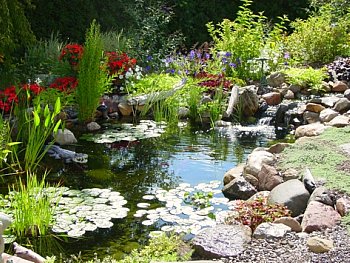
A typical water garden will have about 50 to 75 percent of the water surface covered with plants. The remaining open area provides a place to feed and view the fish. Common surface plants are water lilies and are frequently paired with floating plants like water hyacinth. You will also need to have some underwater plants like Anacharis to help control algae growth. Try to keep the number of goldfish low. The fish are not required, so don't feel as though you must have them. But they are fun to watch, so most ponds have a few. Just don't overdo it. Remember, they (and their waste) become part of the ecosystem - so they must be in balance as well.
Some part of your pond will need to be at least 2 feet deep - deeper is fine. Don't make the mistake of placing your pond in a low spot in the yard. All of the lawn debris, dirt, mud, etc. will wash into it during rainstorms. The area immediately around your backyard pond needs to be lower than the edge of he pond itself. Also avoid locating your pond directly beneath trees, especially hardwoods. Leaves, sap, and bird droppings will not help your pond stay healthy - but they will increase your work load. Make sure you have access to electricity and that you are within a garden hose length of water.
Filtration
There will need to be a constant flow of water to provide for proper aeration, for both fish and plant health. This water flow is normally combined with the filtration system which will be required to algae and bacterial growth. The best form of filtration is to use natural organisms that will eat the bacteria and the algae. A good filter kit will include a media that cultivates these beneficial organisms so that they reproduce and keep growing and working to keep your pond clear and healthy. Mechanical filters are also available. They need cleaning 1 to 3 times per week depending on the cleanliness of the pond water. Cleaning usually involves removing and rinsing a pad similar to the air filters in your house. There are filtration systems that combine both types of filtration (mechanical and mechanical) and may also include an ultraviolet sterilizer. Many filters have what is called a weir, which is a ledge which provides a place for water to fall from, creating aeration. A healthy water garden will need to have the entire volume of water circulated at least once every two hours. So if your pond is 1000 gallons you will need a pump that will circulate at least 500 gallons per hour (GPH). If your pond is 1500 gallons, your pump will need to be at least 750 GPH, and so on. A pump needs to run continuously during the growing season, and can be turned of during the freezing part of the year.
A skimmer is another important piece of your filtration needs. This piece cleans the top two inches of the pond and skims leaves and other similar debris from the surface. If your pond is near hardwoods, you may need to clean the skimmer several times a day in the fall as the leaves are falling. A leaf net may be a much better alternative for you during that time of year. Keep this in mind when choosing the location for your water garden.
Care and Maintenance
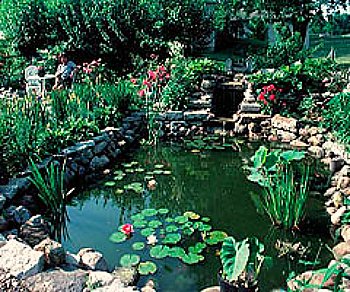
Aquatic plants grow quickly. You should plan about 30 minutes per week during the growing season to cut away yellowing or decaying plant material. If that material is not removed it will fall into the water and will decay there, creating a nitrogen imbalance. Remember the ecosystem? Like all plants, water plants need feeding and fertilizing. Depending on the plants, you should feed your aquatic plants every 2 to 6 weeks during the growing season.
Pumps, filters, and other components will require some level of maintenance, although usually not much. Keeping them generally clean is the best way to insure they keep working. Be especially sure to keep the intake area of the pump free from leaves or other debris. When freezing temperatures arrive, the pump, filter, and all water lines should be turned off and drained so water will not freeze inside and damage them. A submersible pump may be left underwater as long as it remains below the freeze line.
As mentioned earlier - thoughtful planning is the key to a successful water garden. (and most any outdoor project) Picture the end result and work backwards until you get to the start. Combine that planning with proper installation and routine maintenance and your garden will give you many years of enjoyment!
Go to Backyard Ponds
Go to Backyard Water Fountains
Backyard Design Ideas - Proudly serving the Lake Norman area of Central North Carolina including the following towns and counties; Mooresville, Troutman, Charlotte, Statesville, Mt. Ulla, Mt. Mourne, Davidson, Huntersville, Denver, Iredell County, Mecklenburg County, Lincoln County, Cabarrus County, Catawba County, Rowan County. Call us today for a free estimate. 980-722-7370.


Simply The Best. Camino Construction Servicesis the best source for decks, porches, gazebos, whatever your outdoor construction needs may be. In central North Carolina, they are the recommended builder of Backyard Design Ideas. Give them a call - 980-722-7370.
All of the information and ideas provided here are free to you. If you would like to help us keep it free, consider a donation. Any amount is greatly appreciated, although donations over one million dollars will get you a personalized note of thanks! Anyway, if you want to help, just click the button below. Thanks!
Related Pages
Deck Design Ideas
Outdoor Furniture About This Site What is SBI?

Most Viewed Pages
Backyard Pond Ideas Outdoor Fireplaces BBQ Islands Teak Deck Furniture Deck Railing Options Water Gardens Low Voltage Lighting Backyard Waterfalls Grills - Which Is Best? Deck Materials - What Is Best? Outdoor Kitchen Cabinets How To Stain Your Deck


New! Comments
Have your say about what you just read! Leave me a comment in the box below.